

ORIGINALLY PUBLISHED ON JULY 6, 1998
By Steve Newton
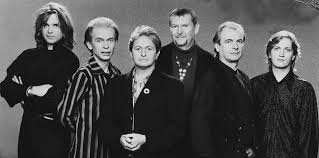
Guitar legend Steve Howe first hooked up with Yes vocalist Jon Anderson and bassist Chris Squire back in 1971, just in time to help steer the British prog-rock outfit to glory with best-selling albums such as Fragile and Close to the Edge.
While the progressive sound of the ’70s seems to be a near-dead issue in the twilight of the ’90s—with even the once-mighty Rush hard-pressed to draw a crowd—the three Yes-men still soldier on.
Along with longtime drummer Alan White and newcomer Billy Sherwood on guitars and keys, they’ll be at GM Place on Friday (July 17), leading me to wonder about the resilient bond that finds them together after 27 years.
“Uh, dear…” ponders Howe from his Ohio hotel room. “Well, I’ve had some nice retreats away from it—’cause I was in Asia in the ’80s—but I guess what it is is just sheer determination that we all found something in Yes and we still find it. It’s still there, so in a way we’ve got to get together and stay together to make that work as much as we can.”
Yes has encountered some obstacles to its alliance over the years, the most notable fracture occurring in the late ’80s, when Squire and Anderson split up and the latter—because Squire had legal dibs on the Yes name—formed a band called Anderson, Bruford, Wakeman, Howe. In 1991 the two opposing factions—which included guitarist Trevor Rabin and original Yes keyboardist Tony Kaye—united for the aptly titled Union album and tour, which played the Pacific Coliseum in May of that year.
According to Howe, it was “an experience” performing with the entire Yes clan, but the stage did get a little crowded at times.
“I enjoyed the first leg very much,” says Howe of the Union tour, “and then we went to Europe and it got a little bit everybody-for-themselves, you know, a bit of spotlight-stealing going on. When we got back to England it seemed to bring everybody back into order again, so we had periods where it was quite satisfying, and a few periods when it was a little bit off-the-wall.”
Rick Wakeman—who replaced Kaye in ’72 and helped guide Yes through its most successful career phase—isn’t in the current lineup. (The band’s main touring keyboardist is Moscow native Igor Khoroshev.) Wakeman has been with the band on and off, his most recent return being for the two-volume Keys to Ascension live recording of ’96-’97.
“Rick came back just for that period,” explains Howe, “then decided he didn’t want to tour with us. We were convinced that Rick would stay with Yes and we did everything we thought we could do towards that end, but there was always a great skepticism by Rick about some of Yes’s goals or intentions. Basically, we wanted to form a band that would play together for maybe six months of the year, and he didn’t have the space for that commitment.”
Back in its Wakeman-enhanced, mid-’70s heyday, Yes sported one of the most acclaimed live shows around, designed by fantasy artist Roger Dean, whose work graced many of the band’s album covers. The cosmic Dean designs are no longer part of the group’s “minimalist” staging, but the sound of the ’70s will be well-represented—even before Yes hits the stage.
The opening act is the Alan Parsons Live Project, featuring the guy who engineered Abbey Road and Dark Side of the Moon. Parsons’s own albums aren’t quite as timeless as those, but his hypnotic instrumental works—such as “I Robot” and “Mammagamma”—could get the early arrivals reaching for their stash.
“We had no idea what it was gonna be like,” says Howe of the pairing. “It was one of those interesting chemistry things we thought was gonna either work or not. We all prayed it would work and it does work; it seems to be a good marriage. They have some nice instrumental sections in their songs that are quite elaborate and quite dramatic.”
Nostalgia-starved ’70s-rock holdouts will surely be the majority at GM Place come Friday, and while Yes is obliged to perform a modicum of material from its latest CD, Open Your Eyes, the real treat will be the oldies, many of which Howe still likes performing.
“There’s something great about playing the big pieces,” says the 51-year-old rocker. “We just added ‘Yours Is No Disgrace’ and ‘Close to the Edge’, and they’re quite exciting because we haven’t played them a hundred times, so we’ve actually got to kind of hold on to the railings quite closely there.”
Longtime Yes followers who aren’t thrilled by the mainstream direction of its latest CD find consolation in the fact that, according to Howe, the band is now headed back to its more progressive roots.
“Open Your Eyes is a kind of distraction from our normal course of action,” he admits, “where we’re developing and expanding and allowing big instrumental sections. It’s certainly a very tight and rather song-oriented record, which I don’t think is very Yes-like, but every now and again we do something like that.
“I don’t think it’s really what the fans want, so hopefully now that Jon and I are teamed up much more closely, we can steer the group back to more of its original scale.”
To hear the full audio of my 1998 interview with Steve Howe–and my 2017 conversation with him as well–subscribe to my Patreon page, where you can also eavesdrop on over 400 of my uncut, one-on-one conversations with:
Don Wilson of the Ventures, 1997
Gordie Johnson of Big Sugar, 1998
Trevor Rabin of Yes, 1984
Albert Lee, 1986
Yngwie Malmsteen, 1985
Robert Cray, 1996
Tony Carey, 1984
Ian Hunter, 1988
Kate Bush, 1985
Jeff Healey, 1988
Richie Sambora of Bon Jovi, 1993
Colin Linden, 1993
Kenny Wayne Shepherd, 1995
Justin Hayward of the Moody Blues, 1986
Elliot Easton from the Cars, 1996
Wayne Kramer from the MC5, 2004
Bob Rock, 1992
Nick Gilder, 1985
Roy Buchanan, 1988
Klaus Meine of Scorpions, 1988
Jason Bonham, 1989
Tom Johnston of the Doobie Brothers, 1991
Joey Spampinato of NRBQ, 1985
Patterson Hood of the Drive-By Truckers, 2003
Andy Powell of Wishbone Ash, 2003
Steve Kilbey of the Church, 1990
Johnette Napolitano of Concrete Blonde, 1990
Randy Hansen, 2001
Dan McCafferty of Nazareth, 1984
Davy Knowles of Back Door Slam, 2007
Jimmy Barnes from Cold Chisel, 1986
Steve Stevens of Atomic Playboys, 1989
Billy Idol, 1984
Stuart Adamson of Big Country, 1993
Ian Anderson of Jethro Tull, 1992
Warren Haynes of Gov’t Mule, 1998
John Bell of Widespread Panic, 1992
Robben Ford, 1993
Barry Hay of Golden Earring, 1984
Jason Isbell, 2007
Joe Satriani, 1990
Brad Delp of Boston, 1988
John Sykes of Blue Murder, 1989
Dave Mustaine of Megadeth, 1998
Alice Cooper, 1986
Lars Ulrich of Metallica, 1985
Shannon Hoon of Blind Melon, 1992
Myles Goodwyn of April Wine, 2001
John Mellencamp, 1999
Mike Campbell of Tom Petty & the Heartbreakers, 1999
Kenny Aronoff, 1999
Jon Bon Jovi, 1986
Dickey Betts of the Allman Brothers, 1992
Little Steven, 1987
Stevie Salas, 1990
J.J. Cale, 2009
Joe Bonamassa, 2011
Rob Baker of the Tragically Hip, 1997
Tommy Emmanuel, 1994
John Petrucci of Dream Theater, 2010
Eric Johnson, 2001
Stu Hamm, 1991
Gene Simmons of Kiss, 1992
Ace Frehley from Kiss, 2008
David Lee Roth, 1994
Allan Holdsworth, 1983
John Mayall of the Bluesbreakers, 1988
Steve Vai, 1990
Tony Iommi of Heaven and Hell, 2007
Flea of the Red Hot Chili Peppers, 1996
Geoff Tate of Queensryche, 1991
James Hetfield of Metallica, 1986
Stevie Ray Vaughan, 1990
Rick Richards of the Georgia Satellites, 1988
Andy McCoy and Sam Yaffa of Hanoi Rocks, 1984
Steve Morse, 1991
Slash of Guns N’ Roses, 1994
Brian May from Queen, 1993
Dickey Betts of the Allman Brothers, 1991
Jake E. Lee of Badlands, 1992
Rickey Medlocke of Lynyrd Skynyrd, 1997
John Fogerty, 1997
Joe Perry of Aerosmith, 1987
Rick Derringer, 1999
Robin Trower, 1990
Billy Gibbons of ZZ Top, 1994
Geddy Lee of Rush, 2002
Buck Dharma of Blue Oyster Cult, 1997
Michael Schenker, 1992
Vince Neil of Motley Crue, 1991
Vinnie Paul of Pantera, 1992
Steve Harris of Iron Maiden, 1988
Sebastian Bach of Skid Row, 1989
Rob Halford of Judas Priest, 1984
Bill Henderson of Chilliwack, 1999
Paul Rodgers, 1997
R.L. Burnside, 1999
Guthrie Govan of the Aristocrats, 2015
Mick Mars of Mötley Crüe, 1985
Carlos Santana, 2011
Walter Trout, 2003
Rudy Sarzo of Quiet Riot, 1983
Tommy Aldridge, 2001
Donald “Duck” Dunn, 1985
Mark Farner of Grand Funk, 1991
Chris Robinson of Black Crowes, 1990
Jennifer Batten, 2002
Mike Fraser, 2014
Leo Kottke, 2002
Lemmy Kilmister of Motorhead, 2002
David Gogo, 1991
Booker T. Jones, 2016
Link Wray, 1997
James Reyne from Australian Crawl, 1988
Mike Rutherford of Genesis, 1983
Buddy Guy, 1991
Country Dick Montana of the Beat Farmers, 1990
Mike Cooley of the Drive-By Truckers, 2016
Gary Rossington of Lynyrd Skynyrd, 1986
Lindsay Mitchell of Prism, 1988
Buddy Miles, 2001
Eddie Money, 1988
Tom Hamilton of Aerosmith, 1983
Gaye Delorme, 1990
Dave Murray of Iron Maiden, 1984
Graham Bonnet of Alcatrazz, 1984
Mick Fleetwood of Fleetwood Mac, 2016
Doc Neeson of Angel City, 1985
Rik Emmett of Triumph, 1985
Sonny Landreth, 2016
Tosin Abasi of Animals as Leaders, 2016
Jeff Beck, 2001
Albert King, 1990
Johnny Ramone of the Ramones, 1992
Peter Frampton, 1987
Otis Rush, 1997
Leslie West of Mountain, 2002
Steve Howe of Yes, 2017
Bruce Dickinson of Iron Maiden, 1983
Uli Jon Roth, 2016
Poison Ivy of the Cramps, 1990
Greg Lake of ELP, 1992
Malcolm Young and Brian Johnson of AC/DC, 1983
Warren Zevon, 1992
Tal Wilkenfeld, 2016
Steve Clark of Def Leppard, 1988
Roy Buchanan, 1986
Gary Moore, 1984
Ronnie Montrose, 1994
Danny Gatton, 1993
Alex Lifeson of Rush, 1992
Ann Wilson of Heart, 1985
J.J. Cale, 1990
Yngwie Malmsteen, 2014
Chris Cornell, 2008
Long John Baldry, 1985
Allan Holdsworth, 1983
Kim Mitchell, 1984
Warren Haynes of the Allman Brothers, 1994
Derek Trucks, 1998
Susan Tedeschi, 1998
Joe Satriani, 2018
B.B. King, 1984
Albert Collins, 1985
Ronnie James Dio, 1985
Tony Iommi of Black Sabbath, 1984
Dick Dale, 2000
Greg Allman, 1998
Dickey Betts, 2001
…with hundreds more to come