
ORIGINALLY PUBLISHED ON DEC. 12, 1991
By Steve Newton
Vancouver’s Bob Rock is one of the most in-demand rock producers in the world today. The albums he’s worked on in the last few years have sold millions of copies and—in the case of Motley Crüe’s Dr. Feelgood—made it to number one in Billboard. Recently, he accomplished the incredible feat of getting former thrashers Metallica on top-40 radio. And right now he’s working on the sophomore effort by British blues-rockers the London Choirboys, who hope to outdo their hit 1990 debut, A Bit of What You Fancy.
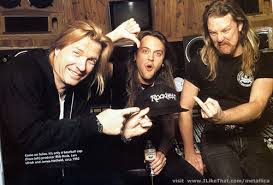
But on the night I drop in on Rock at Burnaby’s Vancouver Studios, he’s got other things on his mind besides making hit albums for other bands. In one of the studio’s small editing rooms, the blond rocker can’t wait to play his visitor a rough mix of his own group, Rockhead.
Hunched forward in a chair, cradling the tape case in his hands, Rock is living up to his name: his shaggy mane flies as he nods his head to the music, while his hiking boots beat out a steady rhythm on the carpet. He’s obviously excited about the sound of Rockhead, even if recent showcase gigs at clubs like Coconuts and the Rock Cellar have garnered a mild response from top-40 fans.
The combined effort of Rock, his longtime drummer pal Chris Taylor, singer Steve Jack (ex-Love Hunter), and bassist Jamie Koch (from the Strolling Clones) has resulted in a mainstream hard-rock noise which combines the bluesy raunch of the Cult with a big, radio-friendly sound reminiscent of Bon Jovi. It’s much different from anything the producer/guitarist has done before, with longtime collaborator Paul Hyde in the Payola$ and Rock & Hyde, but, in a way, it’s actually bringing Rock full circle.
“Strange as it may seem, when Paul and I were in high school, all we listened to was harder rock. And it was actually the whole punk movement that gave us a chance to get up on stage and really do something. But just the way the music scene went, and for whatever reason—probably Paul took me there—we shifted to a softer thing. In the Payola$ and Rock & Hyde we fooled around in a lot of areas of music, and it had a lot to do with Paul’s influence; he didn’t much care for the harder rock.
“But that’s kind of always been there for me,” adds Rock, sipping on a Coke Classic. “And then when I was in the studio, engineering [Bon Jovi’s] New Jersey, and then producing John Sykes [Blue Murder], just being around the hard rock I kinda went, ‘This is what I’m missing.’
“So Rockhead came out of the fact that I was inspired by some of the bands I’ve worked with and wanted to get back into what I am as a musician. I mean, if anybody remembers the first Payola$ gig, we were awfully loud!”
Rock’s fruitful musical journey began in Winnipeg, where, as a little kid, he saw the Rolling Stones on TV.
“I can still remember seeing Keith Richards with that Plexiglas guitar and his carrot-top haircut,” recalls Rock. “I said, ‘I have to be that guy. I don’t know what he is, but that’s me.’ And when I moved out to Victoria, I didn’t really have any friends, so basically I got into music. That’s when I really started getting a grasp on it, anyway.”
Rock did end up finding one friend in Victoria, though, so he and high-school buddy Paul Hyde formed a blues band that played places like Club Tango and the Purple Onion.
“Paul played bass, and we were into Humble Pie, Rory Gallagher, and Taste—all these English bands. And when we finished school, Paul and I ended up goin’ to England to be rock stars. That never really happened, so we both ended up coming back to Canada and finding jobs.”
The two met up again in Vancouver in ’78 or so and started to put together the Payola$, an intense, punk-influenced outfit that showed a lot of rowdy promise but—apart from the Canadian hit single “Eyes of a Stranger”—couldn’t cut it commercially.
Rock also became involved in the technical aspects of the recording process. It beat hammering nails.
“I got into a recording studio because I didn’t like construction work,” chuckles Rock. “Not that there’s anything wrong with it, but I wasn’t enjoying myself, so I thought I’d at least get into a studio and learn how to record people. But being an engineer was sort of limiting, so I went on to producing. I guess the first bands I ever produced were the Payola$, and then the Young Canadians and the Pointed Sticks and stuff. I got to practise on those guys, learn my trade, and it’s developed into this.”
Yet Rock himself isn’t so sure what makes top-selling acts like Metallica and Motley Crüe vie for his skills at the sound board.
“But I know what I try and do as a producer, and that’s let a band or artist be themselves, and just bring out their strongest points. I’m not the kind of producer that has a certain sound, which is one of the reasons why I enjoyed doin’ Metallica. They don’t sound like Motley or any of the other things I’ve done, and I like that.”
With the London Choirboys—a band whose party-hearty sound is most reminiscent of Rod Stewart-era Faces—Rock and engineer Randy Staub find themselves sailing a straightforward course.
“The Choirboys are pretty simple rock ’n’ roll,” explains Rock. “It’s off-the-hip kinda stuff, and a lot of it has a ‘live’ feel. Randy and I are really enjoying it, because it’s so different from what we were working at with Metallica. Not that there was anything wrong with Metallica, but we were in the studio for a long time, and it was a very studious, intense thing, so it’s great to do something that’s just straight-ahead.”
As for the Choirboys themselves, guitarist Guy Bailey says he couldn’t be happier about nabbing Rock for their album. “Coming up here and working with someone like Bob, especially after the success of Metallica, is gonna be really good for us,” says Bailey in his Cockney twang. “He’s actually incredibly versatile—which I suppose is one of the prerequisites for a good producer—and he’s got a great ear for the basics: guitar, drums, and bass. Plus he’s really sympathetic to everything we do. He’s like a father figure to us.
“Yeah,” laughs the rocker, “put that in. That’ll really piss him off.”
Bailey leaves no doubt that Rock has won over at least one Choirboy as both a producer and a friend, but Rock says being on a casual, friendly basis with his clients isn’t a major factor in getting the best out of them. “I actually prefer to work with bands and people that are intense and feel strong about their music,” he says, “because that’s the way I am. I take what I do very seriously. So even though we may have a rough time in the studio, and there’s arguments and flare-ups, that can be really good for the music.”
But wouldn’t a producer of Bob Rock’s stature have it written into his contract that he could stamp his little hiking boots and get his own way whenever he wanted?
“Hell no! When I’m working with an artist, it’s their career, not mine. It’s their piece of work. I’m there to give them a different point of view and help guide them. But the bottom line is them. That’s why it’s always so strange when you read interviews after you’ve done bands and you’ve had this experience and they end up slagging you. It’s really silly because—especially the way I work—we’re all in it together.”
Any discussion of music production in Vancouver eventually leads to the mention of Bruce Fairbairn, the man who put this city on the international recording map by drawing such biggies as AC/DC, Aerosmith, and Bon Jovi to town. How do Rock’s production techniques compare with those of Fairbairn?
“All I can say is that Bruce Fairbairn has this wonderful magic about him in terms of dealing with artists and getting the best out of ’em. Myself, I don’t know what I do. Bruce Allen tells me that it comes from the heart a little more for me,” Rock says of his manager, “that I’m in it almost as an artist.
“Mike Fraser [the Little Mountain Sound recording engineer] and Bruce Fairbairn and myself are very lucky in that now a lotta people are liking what we’re doing, but all three of us have different things to offer. And Bruce is definitely a different producer than I am.”
Fairbairn doesn’t quite agree with Rock’s assessment, however. “Bob and I pretty much come from a similar school of producing,” says Fairbairn, “so I don’t think there’s that many differences. It’s not like he’s chosen to produce in a style like Mark Knopfler or something like that, in which case you could say, yeah, sure, Bob has a totally different approach or style than I do. We really work in the same genre, with similar kinds of bands.”
One thing that the two producers do agree on is that there isn’t any competition between them for the world-famous bands that want to record in their home studio, Little Mountain Sound. “Only in other people’s eyes,” says Rock, “not between us.”
“Sometimes we end up getting called on the same bands,” admits Fairbairn, “but it’s never boiled down to where he and I are going after the same gig. We usually end up talking about it amongst ourselves, and that’s really a nice way to do it. Life’s too short to get into fighting with each other over who’s gonna do what band.”
Fairbairn says AC/DC, his current project, is a case in point.
“We both liked that band a lot, but it was the same thing with Metallica. There’s a lot of bands out there that, when they’re gonna make a record, they make up a list of five guys that they would ideally like to work with, and a lotta times Bob and I will be on that list. But there’s lots of good bands out there, and lots of good music to make, so we never end up running into one another.”
While Rock wouldn’t mind having his name on an AC/DC record, there are other bands, past and present, that he’d wish to produce. He’s quick to pick Led Zeppelin as his choice fantasy.
“I don’t think there’s any question about that,” says Rock. “But there’s all sorts of people that I’d love to work with. There’s a lot of great new music, like Nirvana. There’s a lot of great bands out of Seattle, like Alice in Chains. And I would have loved to have worked with Mother Love Bone.
“But I pretty much like to work with anybody that believes in their music. I’ve been so very lucky—financially I’m doin’ okay—that now I think of music and engineering and producing, the whole thing, as more of a journey. Wherever it leads me, that’s where I’ll go. I just want to work with artists I like.”
But neither the financial rewards of producing big-name acts nor the notoriety that comes with it could help Rock out when it came time to get Rockhead into the clubs. He was startled to find how difficult it was for an original act to find a gig in this town.
“I couldn’t believe how tough it was,” says Rock. “I was stupid enough to think, ‘Okay, we’ve got a record comin’ out, so maybe somebody’ll let us play,’ but basically everybody said, ‘Who cares? Go away.’ So I had to get Bruce [Allen] to yell at everybody just to get us to play.
“Luckily enough a couple of club owners were silly enough to actually let us,” quips Rock, “so now we’re doing okay. Some people are coming out to see us. But basically we’re losing money just to be able to play live. And I feel sorry for all the other bands, ’cause there’s only a couple of places to play original music here. So they’re havin’ a tough time, too.
Despite the indifference of local clubs and audiences, Bruce Allen thinks the chances are good of Rockhead making it big in today’s rock market-place.
“The reason they’ve got a good chance is because Bob Rock has been sitting in the studio with guys like Jon Bon Jovi and Metallica and Motley Crüe,” says the feisty manager. “And there’s something in common with every one of those bands in that they know how to make hit records, radio-friendly records.
“So with all the things Bob has learned, it’s gonna be a lot different record than he used to put out with the Payola$, who weren’t exactly radio-friendly. I believe Bob has learned how to get on the radio from being in those sessions.”
As well as having Allen at the helm for the Rockhead project, Rock makes full use of B.A.’s management expertise in his producer’s role, too.
“Bruce is basically the deal-getter,” says Rock, “and it’s a good thing to have somebody, other than a producer, to deal with the financial things and all the problem areas. It’s not for me to piss off bands’ managers or A&R people; I’d rather Bruce do that. And,” chuckles Rock, “he does a real good job of it.
“We’ve got a great relationship now,” adds Rock. “Obviously Bryan Adams demands a lot of his attention—and so he should—but Bruce knows what I wanna do, and we’ve got a good plan.”
If—for some strange reason—Rockhead’s heavy but accessible sound doesn’t make it on the charts and airwaves, and the dynamic duo’s plan for world domination crumbles, don’t expect the 37-year-old Rock to slink back into his studio and spend the rest of his life helping to fulfil other people’s musical ambitions.
“I’m totally possessed by music,” says Rock, “so producing isn’t enough, that’s the thing. It would be great to sell a lot of records with Rockhead, but I’m just real happy to be playing in a hard-rock band. I dig the shit out of bein’ on-stage with these guys. What makes me happy—besides bein’ with my wife and kids—is playin’ guitar in a band. I’d rather do that than anything.”
To hear the full 35-minute audio of my 1991 interview with Bob Rock–and my 1992 and 2002 conversations with him as as well–subscribe to my Patreon page, where you can eavesdrop on over 600 of my uncut, one-on-one conversations with:
Dave Martone, 2020
Ian Gillan of Deep Purple, 2006
Joss Stone, 2012
Glenn Tipton of Judas Priest, 2005
Jack Blades of Night Ranger, 1984
Vivian Campbell of Def Leppard, 1992
Colin James, 1995
Kim Simmonds of Savoy Brown, 1998
Tom Cochrane of Red Rider, 1983
Ed Roland of Collective Soul, 1995
Taj Mahal, 2001
Tom Wilson of Junkhouse, 1995
Mike McCready of Pearl Jam, 2003
David Lindley, 2002
Marty Friedman of Megadeth, 1991
John Hiatt, 2010
Nancy Wilson of Heart, 2006
Jeff Golub, 1989
Moe Berg of the Pursuit of Happiness, 1990
Todd Rundgren, 2006
Chad Kroeger of Nickelback, 2001
Steve Earle, 1987
Gabby Gaborno of the Cadillac Tramps, 1991
Terry Bozzio, 2003
Roger Glover, 1985
Matthew Sweet, 1995
Jim McCarty of the Yardbirds, 2003
Luther Dickinson of North Mississippi Allstars, 2001
John Rzeznik of the Goo Goo Dolls, 1995
Steve Hackett from Genesis, 1993
Grace Potter, 2008
Buddy Guy, 1993
Steve Lynch of Autograph, 1985
Don Wilson of the Ventures, 1997
Gordie Johnson of Big Sugar, 1998
Trevor Rabin of Yes, 1984
Albert Lee, 1986
Yngwie Malmsteen, 1985
Robert Cray, 1996
Tony Carey, 1984
Ian Hunter, 1988
Kate Bush, 1985
David Gilmour from Pink Floyd, 1984
Jeff Healey, 1988
Richie Sambora of Bon Jovi, 1993
Colin Linden, 1993
Kenny Wayne Shepherd, 1995
Justin Hayward of the Moody Blues, 1986
Elliot Easton from the Cars, 1996
Wayne Kramer from the MC5, 2004
Bob Rock, 1992
Nick Gilder, 1985
Roy Buchanan, 1988
Klaus Meine of Scorpions, 1988
Jason Bonham, 1989
Tom Johnston of the Doobie Brothers, 1991
Joey Spampinato of NRBQ, 1985
Patterson Hood of the Drive-By Truckers, 2003
Andy Powell of Wishbone Ash, 2003
Steve Kilbey of the Church, 1990
Edgar Winter, 2005
Johnette Napolitano of Concrete Blonde, 1990
Randy Hansen, 2001
Dan McCafferty of Nazareth, 1984
Davy Knowles of Back Door Slam, 2007
Jimmy Barnes from Cold Chisel, 1986
Steve Stevens of Atomic Playboys, 1989
Billy Idol, 1984
Stuart Adamson of Big Country, 1993
Ian Anderson of Jethro Tull, 1992
Warren Haynes of Gov’t Mule, 1998
John Bell of Widespread Panic, 1992
Robben Ford, 1993
Barry Hay of Golden Earring, 1984
Jason Isbell, 2007
Joe Satriani, 1990
Brad Delp of Boston, 1988
John Sykes of Blue Murder, 1989
Dave Mustaine of Megadeth, 1998
Alice Cooper, 1986
Lars Ulrich of Metallica, 1985
Shannon Hoon of Blind Melon, 1992
Myles Goodwyn of April Wine, 2001
John Mellencamp, 1999
Mike Campbell of Tom Petty & the Heartbreakers, 1999
Kenny Aronoff, 1999
Jon Bon Jovi, 1986
Dickey Betts of the Allman Brothers, 1992
Little Steven, 1987
Stevie Salas, 1990
Joe Bonamassa, 2011
Rob Baker of the Tragically Hip, 1997
Tommy Emmanuel, 1994
John Petrucci of Dream Theater, 2010
Eric Johnson, 2001
Stu Hamm, 1991
Gene Simmons of Kiss, 1992
Ace Frehley from Kiss, 2008
David Lee Roth, 1994
Allan Holdsworth, 1983
John Mayall of the Bluesbreakers, 1988
Steve Vai, 1990
Tony Iommi of Heaven and Hell, 2007
Flea of the Red Hot Chili Peppers, 1996
Geoff Tate of Queensryche, 1991
James Hetfield of Metallica, 1986
Stevie Ray Vaughan, 1990
Rick Richards of the Georgia Satellites, 1988
Andy McCoy and Sam Yaffa of Hanoi Rocks, 1984
Steve Morse, 1991
Slash of Guns N’ Roses, 1994
Brian May from Queen, 1993
Dickey Betts of the Allman Brothers, 1991
Jake E. Lee of Badlands, 1992
Rickey Medlocke of Lynyrd Skynyrd, 1997
John Fogerty, 1997
Joe Perry of Aerosmith, 1987
Rick Derringer, 1999
Robin Trower, 1990
Billy Gibbons of ZZ Top, 1994
Mick Ronson, 1988
Geddy Lee of Rush, 2002
Buck Dharma of Blue Oyster Cult, 1997
Michael Schenker, 1992
Vince Neil of Motley Crue, 1991
Vinnie Paul of Pantera, 1992
Joan Jett, 1992
Steve Harris of Iron Maiden, 1988
Sebastian Bach of Skid Row, 1989
Rob Halford of Judas Priest, 1984
Bill Henderson of Chilliwack, 1999
Paul Rodgers, 1997
R.L. Burnside, 1999
Guthrie Govan of the Aristocrats, 2015
Mick Mars of Mötley Crüe, 1985
Carlos Santana, 2011
Walter Trout, 2003
Rudy Sarzo of Quiet Riot, 1983
Tommy Aldridge, 2001
Donald “Duck” Dunn, 1985
Mark Farner of Grand Funk, 1991
Chris Robinson of Black Crowes, 1990
Jennifer Batten, 2002
Mike Fraser, 2014
Leo Kottke, 2002
Lemmy Kilmister of Motorhead, 2002
David Gogo, 1991
Booker T. Jones, 2016
Link Wray, 1997
James Reyne from Australian Crawl, 1988
Mike Rutherford of Genesis, 1983
Buddy Guy, 1991
Country Dick Montana of the Beat Farmers, 1990
Mike Cooley of the Drive-By Truckers, 2016
Gary Rossington of Lynyrd Skynyrd, 1986
Lindsay Mitchell of Prism, 1988
Buddy Miles, 2001
Eddie Money, 1988
Tom Hamilton of Aerosmith, 1983
Gaye Delorme, 1990
Dave Murray of Iron Maiden, 1984
Graham Bonnet of Alcatrazz, 1984
Mick Fleetwood of Fleetwood Mac, 2016
Doc Neeson of Angel City, 1985
Rik Emmett of Triumph, 1985
Sonny Landreth, 2016
Tosin Abasi of Animals as Leaders, 2016
Jeff Beck, 2001
Albert King, 1990
Johnny Ramone of the Ramones, 1992
Peter Frampton, 1987
Otis Rush, 1997
Gord Downie of the Tragically Hip, 1989
Leslie West of Mountain, 2002
Steve Howe of Yes, 2017
Bruce Dickinson of Iron Maiden, 1983
Uli Jon Roth, 2016
Poison Ivy of the Cramps, 1990
Greg Lake of ELP, 1992
Robert Plant, 1993
Malcolm Young and Brian Johnson of AC/DC, 1983
Warren Zevon, 1992
Tal Wilkenfeld, 2016
Steve Clark of Def Leppard, 1988
Roy Buchanan, 1986
Gary Moore, 1984
Ronnie Montrose, 1994
Danny Gatton, 1993
Alex Lifeson of Rush, 1992
Ann Wilson of Heart, 1985
Yngwie Malmsteen, 2014
Chris Cornell, 2008
Long John Baldry, 1985
Allan Holdsworth, 1983
Kim Mitchell, 1984
Warren Haynes of the Allman Brothers, 1994
Derek Trucks, 1998
Susan Tedeschi, 1998
Joe Satriani, 2018
B.B. King, 1984
Albert Collins, 1985
Ronnie James Dio, 1985
Tony Iommi of Black Sabbath, 1984
Dick Dale, 2000
Gregg Allman, 1998
Dickey Betts, 2001
…with hundreds more to come
Discover more from earofnewt.com
Subscribe to get the latest posts sent to your email.